Llegar al Norte
Project funded by the European Union
Monday, July 4, 2022
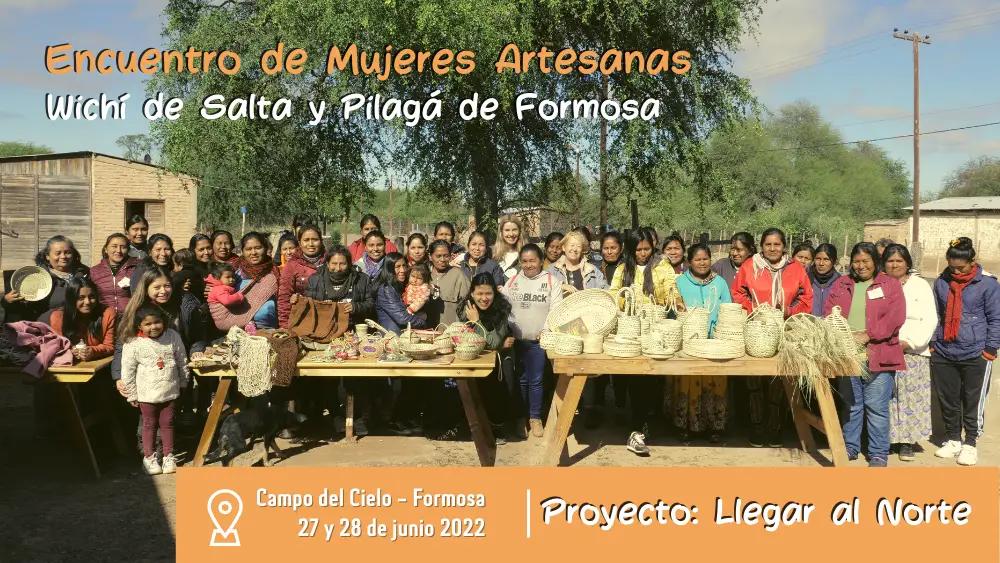
Wichí and Pilagá artisan women from the Chaco region exchanged learnings and experiences as part of the “Llegar al Norte” project, co-financed by the European Union
As part of the “Llegar al Norte” project, several activities and workshops were held in which groups of Wichí artisans from Embarcación and Alto de la Sierra, in the province of Salta, shared experiences on production, organization, and marketing of crafts with Pilagá artisans from Campo del Cielo, in the province of Formosa. More than 50 artisan women took part in the activity.
Co-financed by the European Union, “Llegar al Norte” is a project coordinated by Asociación Civil Pata Pila, together with Fundación ProYungas, aimed at improving nutrition levels for children aged 0 to 5 in three indigenous communities in the municipalities of Pichanal, Embarcación, and Santa Victoria, in northern Salta.
One of the project's lines of action involves creating socio-productive ventures with mothers who attend the Early Childhood Care Centers. Based on a study of the socio-productive situation of craft production in Alto de la Sierra and La Loma, ProYungas designed a short- and medium-term action plan to organize, produce, and market crafts.
As part of the project, women were supported in formalizing two groups of Wichí artisans: “Grupo Manos Artesanas de La Loma” and “Grupo de artesanas ATSINHAY HANYAHAY de Alto de la Sierra,” with whom workshops were held on the forest management of raw materials (palm and chaguar fiber) and on standardizing crafts, inventories, and designs. As part of this process of strengthening these women's artisan groups, exchange days were organized between the Pilagá and Wichí artisans, highlighting the collective structures of these regional women's organizations in the Chaco region.
The Pilagá community of the province of Formosa has extensive experience as a group of indigenous Chaco women organized for craft marketing. They have the Asociación de Artesanas Pilagá LAQATALAYOQTE, made up of more than 150 women from 6 communities. For more than 8 years, they have been working across the entire production process, craft marketing, and the collective organization of women's groups living in the different communities around the Bañado La Estrella. This association markets crafts on an ongoing basis and belongs to collective structures such as the Cooperativa de Mujeres Artesanas del Chaco and the Colectivo de Mujeres del Gran Chaco.
In addition to the Wichí and Pilagá artisan groups, the activities were also joined by Asociación Civil de Campo del Cielo, Formosa; the Cooperativa de mujeres artesanas del Chaco-COOMAR; the Colectivo de Mujeres del Gran Chaco; and Fundación Gran Chaco.
About “Llegar al Norte”
The “Llegar al Norte: The Human Rights Debt in the Indigenous Communities of Northern Salta Province” project is coordinated and implemented by Asociación Civil Pata Pila, together with Fundación ProYungas, and co-financed by the European Union. The project seeks to restore basic human rights in 16 indigenous communities in Embarcación, Pichanal, and Alto la Sierra, in northern Salta, actively working with the Wichí, Chorote, Toba, and Ava Guaraní peoples of the region.
Monday, June 13, 2022
The second year of the “Llegar al Norte” project, co-financed by the European Union, has begun
The “Llegar al Norte” project, co-financed by the European Union and carried out by Asociación Civil Franciscana Pata Pila and Fundación ProYungas, seeks to restore basic human rights in 16 indigenous communities in Embarcación, Pichanal, and Alto la Sierra, in northern Salta, actively working with the Wichí, Chorote, Toba, and Ava Guaraní peoples of the region.
Last April marked the end of the first of the project's three years, whose goals aim to respond to the socio-sanitary emergency in the area, declared in 2020. Throughout that period, Pata Pila and ProYungas carried out numerous activities, always with an eye toward building a bridge between assistance and development. These actions were carried out within an inter-institutional framework, that is, together with community organizations, civil associations, NGOs, provincial ministries, national government institutions, Redes Chaco, and others.
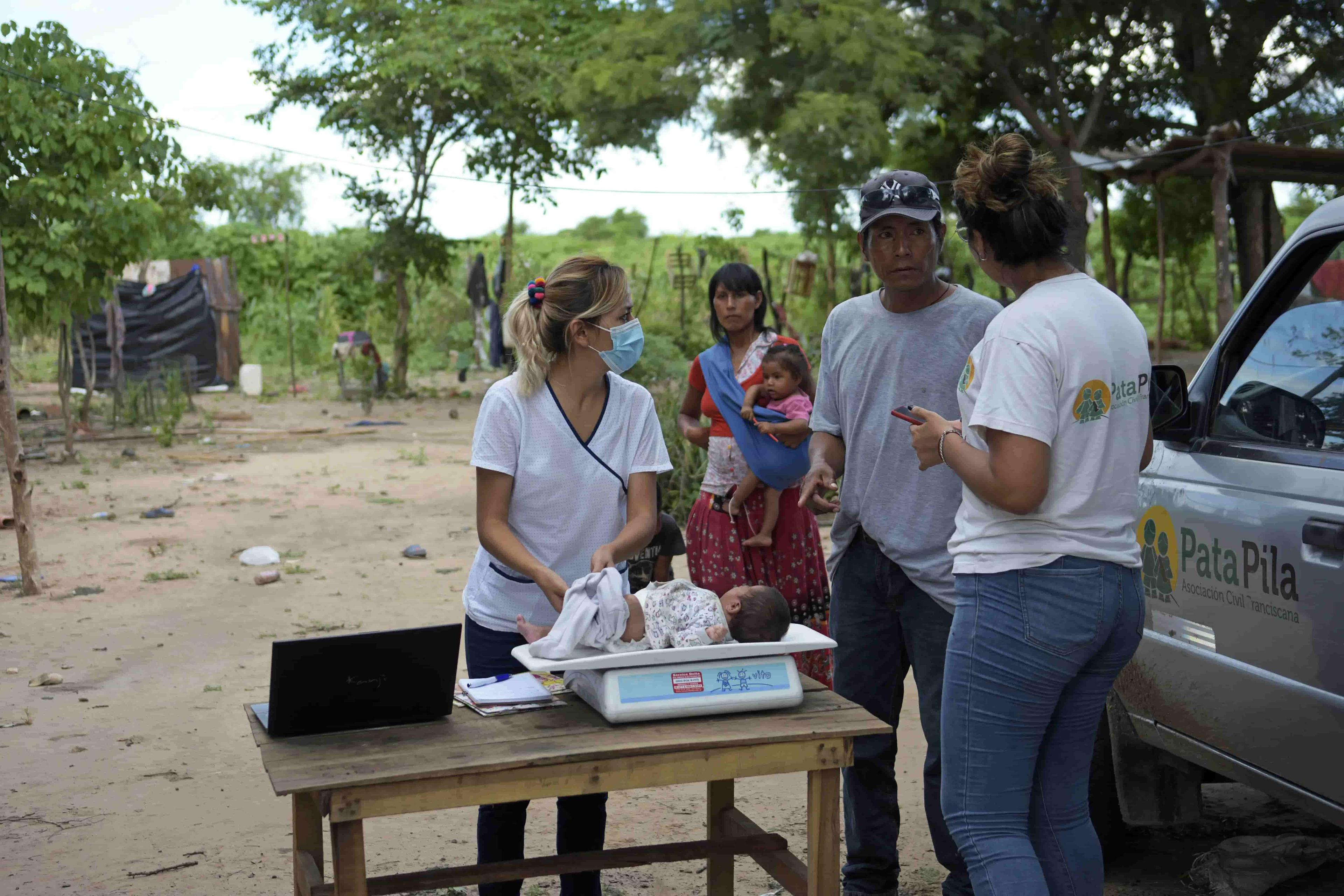
During the first year of “Llegar al Norte,” comprehensive health care was provided to 1,800 children aged 0 to 5 from indigenous communities in the municipalities of Pichanal, Embarcación, and Santa Victoria Este, increasing children's access to nutritional prevention, monitoring, diagnosis, and treatment services.
Given the difficulty of accessing safe drinking water in the region, water surveys were carried out together with the Argentine Red Cross in the project's beneficiary locations. This increased the availability of water suitable for hygiene and consumption in the communities, promoting awareness of their rights of use and the management of its upkeep. A water well is currently being developed in Misión San Francisco (Pichanal).
Working assertively on socio-community integration, actions were coordinated with four provincial ministries of Salta: health, education, security, and infrastructure.
In this context, workshops on intercultural health and indigenous rights were held for state agents and security personnel in Salta, as well as workshops on community legal empowerment together with ACIJ (Asociación Civil por la Igualdad y la Justicia).
For its part, Fundación ProYungas, co-applicant of the project, carried out a study of the socio-productive situation of craft production in Alto de la Sierra and La Loma, with the aim of creating socio-productive ventures with mothers attending the Early Childhood Care Centers; a study from which a short- and medium-term action plan was designed to organize, produce, and market crafts. Through workshops and meetings, the artisan groups were formalized, forming leadership and coordination teams and defining the foundations of their organizations (names, logos, mission, vision for each community). Tools for production were also provided (machetes, gloves, tape measures, files, etc.), and workshops were held on forest management of raw materials (palm and chaguar fiber) and on standardizing crafts, inventories, and designs.
As a closing event for what was the first year of “Llegar al Norte,” Pata Pila organized an intercultural health gathering attended by 72 representatives from 35 communities in northern Salta. It took place in the city of Tartagal and aimed to review the socio-sanitary situation two years after the emergency declaration.
Despite the ongoing work on nutrition, access to water, and special assistance for children, new actions are planned for the project's second year. These include an exchange with Pilagá artisan women, a diploma course on human rights and children's health for community leaders, trade training with the ministry of education for men and women, advocacy on regulating laws, more water infrastructure, and more.
Monday, March 7, 2022
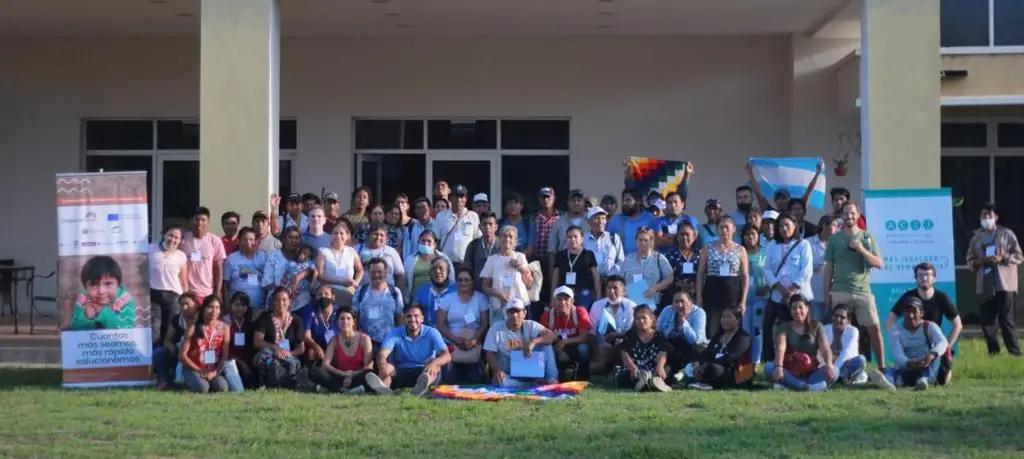
An intercultural health gathering was held for representatives of indigenous communities
The gathering was organized by the boards of Misión La Loma, with support from Asociación Civil Pata Pila and Asociación Civil por la Igualdad y la Justicia (ACIJ). All of it as part of the “Llegar al Norte” project, co-financed by the European Union.
On Friday, March 4, an intercultural health gathering for representatives of indigenous communities was held in the city of Tartagal, to review the socio-sanitary situation two years after the emergency declaration.
In addition to discussing socio-sanitary diagnoses, attendees debated the main aspects of Provincial Law No. 7856 on intercultural health, while also promoting proposals for its regulation.
It was the first gathering of its kind among community representatives. It was attended by 80 indigenous community leaders from the municipalities of Santa Victoria Este, Aguaray, Tartagal, Gral. Mosconi, Embarcación, and Pichanal, belonging to different ethnic groups (Wichí, Ava Guaraní, Chorote, and Toba).
The call for the gathering was led by grassroots community organizations, and supported by the ACIJ team — a member of the Infancia en Deuda collective — and by Pata Pila, which is carrying out the “Llegar al Norte” project, co-financed by the European Union over a 3-year period.
In the first part of the event, the representatives were divided into committees to assess certain issues in the area, such as the right to health, access to water, land and productive conditions, and education. This was followed by a legal workshop on the Intercultural Health Law, the legal action filed to secure its enforcement, and the injunction currently in place. Four committees then discussed the content they would like to see in the regulations to be issued by the provincial Executive Branch.
To close the event, the leaders of the indigenous communities agreed to draft and sign the “Declaration for the right to comprehensive health for indigenous peoples” (link at the end of this article). Among other key points, the document highlights that two years after the socio-sanitary emergency was declared in the departments of Orán, San Martín, and Rivadavia, the situation has not been reversed. It expresses particular concern about the current situation of children and adolescents facing issues related to nutrition, problematic substance use, and education — especially regarding access, quality, interculturality, and the impacts of the pandemic.
Finally, the leaders of the indigenous communities decided to address “the group of public decision-makers with responsibility over these issues, in order to demand that they take on their role in implementing the measures needed to end the vulnerable situation our communities face, reverse structural discrimination, and guarantee equal conditions and effective access to human rights as a whole.”
Regarding this, Macarena Aucapiña Nieva, Pata Pila's institutional development director and coordinator of the “Llegar al Norte” project, said: “This gathering was the last activity carried out as part of the goals Pata Pila set for the first year of the project. Throughout this year we worked with our internal teams, trained caciques in their communities and police officers in interculturality and indigenous rights, and on Friday we closed with a space for gathering and dialogue among representatives of the different communities.”
“The collaboration between civil society organizations to collectively rethink possible actions aimed at improving the quality of life of the most vulnerable populations is of great importance for greater access to rights and development opportunities,” Macarena concluded.
Link to the “Declaration for the right to comprehensive health for indigenous peoples”: https://acij.org.ar/wp-content/uploads/2022/03/declaracion-sobre-el-derecho-a-la-salud-integral-de-pueblos-originarios-1_organized.pdf
Wednesday, January 26, 2022
Interview with Lic. Mariel Flores, nutritionist at the Embarcación - Pichanal care center
- What does the nutritional care provided to children in the area consist of?
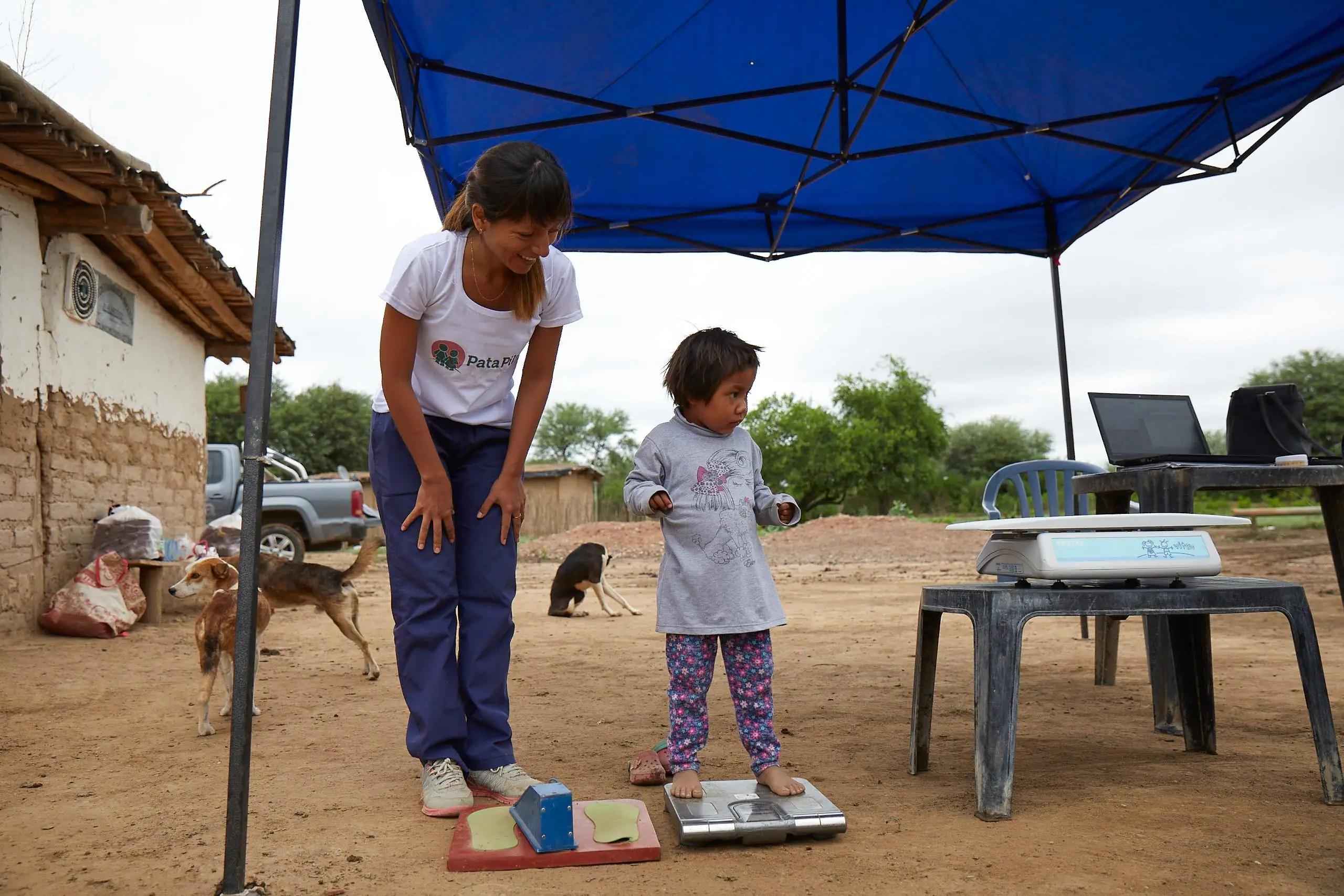
The care provided at Pata Pila's centers consists of assessing the growth and development of children under 5 years old, detecting possible nutritional deficiencies, and supporting mothers and/or caregivers in the recovery process or in improving their diet. Assistance is also provided through the distribution of milk and nutritional supplements as needed for each child.
- How do you see the current nutritional situation of children in the area?
While the communities we currently work in don't report many severe cases of child malnutrition, deficiencies exist and are invisible most of the time. We see a high prevalence of children with anemia and stunted growth, along with excess weight issues — which doesn't mean nutritional deficiencies don't exist, but rather that they result from an unbalanced diet, both now and in the past. This diet tends to rely mostly on energy-dense foods like bread, rice, pasta, and flour, without meeting the vitamin and mineral requirements provided by other foods like fruits, vegetables, nuts, whole grains, and seeds — foods that cost more and are often inaccessible from a geographic standpoint too, since families have to get their food from one or two places near their homes with little room to choose.
- What progress do you see in terms of nutritional care for children in the area, from when the project began until today?
Personally, I believe that over this time, getting to know the situation of the communities that are part of the “Llegar al Norte” project — their socioeconomic situation, food availability and access, habits and customs — allows me, in my role as a nutritionist, to act and support families in a way that's more accurate and empathetic than at the start of the project, adapting recommendations to their context.
Also, the level of trust built with mothers allows for better communication toward improving children's health and nutrition status. In terms of assistance, we now have some resources we didn't have at first, such as infant formula for children under 6 months, food supplies, and water purifiers.
- Are there statistics on how many children who initially entered the Center with severe malnutrition currently have a healthy weight?
There are statistics that are updated monthly with the nutritional diagnoses of all children in the program. In addition, the Nutrition area produces a monthly report on the situation of children with moderate and severe malnutrition. We have a total of 6 children who initially entered with a critical nutritional status and today maintain a healthy weight.
- What does working at Pata Pila mean to you?
Working at the Association has represented, and continues to represent, a constant challenge and learning experience from multiple angles. Living and working in the communities means, in a way, becoming part of them, adapting to a different culture and way of life. It also means an opportunity to act and contribute, in a small way, to responding to the problems these communities face, with the frustrations and rewards that come with that day to day — which is why I consider my experience at Pata Pila to be very enriching, both personally and professionally.
- What challenges do you have ahead in your daily work?
I believe there's still a lot of work to do, which represents several challenges. Some of them might be strengthening interdisciplinary work, both within the team and with outside actors; finding and putting into practice teaching techniques that encourage more participation from mothers in the educational workshops offered in my area; specializing in addressing issues that are common in the communities, like drug use or disability in children; and making workspaces more welcoming for them. Communication and trust with some of the program's mothers also remains a daily challenge, as does continuing to break down deeply rooted myths about children's diet and nutrition that affect it.
Monday, December 20, 2021
Workshop on integrated intercultural approaches to indigenous peoples, for the province's community police
Among the goals of the training sessions for field agents run by Asociación Civil Pata Pila through the “Llegar al Norte” project, we aim to strengthen and highlight territorial networks and the coordination capacities of institutional agents and community leaders, in order to facilitate care processes and guarantee access to rights for children under 5 who are part of our support program, along with their families.
Within this framework, we carried out a first training workshop for officers of the Salta Provincial Police, covering topics such as reflecting on practices, incorporating the concept of interculturality and indigenous rights, and building inter-institutional links that include community institutions, in order to facilitate care processes for indigenous people.
We have already held 7 participatory workshops, in the towns of Santa Victoria Este, Alto la Sierra, Pichanal, and Embarcación, with the collaboration of facilitators from our Asociación Civil Pata Pila and the Argentine Red Cross, a partner in our Llegar al Norte project.
Part of the work in this workshop aimed to make this working group aware of certain situations of mistreatment that indigenous people face within the healthcare system or from institutions. We worked on showing how normalized this practice has become and where they can make a difference through mediation, especially in areas with a larger indigenous presence such as Santa Victoria Este and Alto La Sierra.
The workshops also addressed the concept of communities as an institution. Agents were trained on Argentina's cultural diversity, particularly in the Province of Salta, on the number of indigenous peoples and languages spoken, and on the idea that every community organization is an institution, with its own roles, functions, and particularities that make it one. In fact, it was very interesting to introduce the idea that communities and community organizations, when building “networks” or intercultural approach and mediation strategies, should be included as a ranked Institution, as a participant in building the “local network of comprehensive care for children.”
Thursday, December 16, 2021
Interview with Salta's Secretary of Security: Benjamín Cruz
How did this training agreement with Asociación Pata Pila come about?
The agreement we worked on sought not just to coordinate, but to achieve consistency specifically in the community police's work in the north of the province — in gathering information and doing fieldwork, in order to reach families and get a real sense of the problems that need a response.
Training our community police officers is also meant to cover technical matters, to make data collection more efficient, to design logistics, and to shape the lines of territorial work, so we can move forward with what the State has and what can serve society. In this case, our brothers and sisters from the indigenous communities of the north. This helps us access their culture in a different way, to interact and to get involved ourselves.
Living with them, being with them, taking part in their customs and ways of life, helps us build procedures so we can work hard on what they need us to do.
How do you see this collaboration between civil society organizations and the State taking shape, and where do you think the potential lies for both sides?
What we need to do is keep working with civil society organizations. If we, from the Provincial State and the Executive Branch, have the chance to count on your help, it's not just because of the funds or the assistance you can provide, but also because it's very useful for exchanging information, sharing statistics, planning ahead, and continuing to build policy.
Who better than civil associations to give us that information and to work on what we need to do in the long run, thinking that whoever ends up administering the State and being in the executive role can sustain over time all these policies of collaboration that we can build together with civil society.
What would you like to achieve over time? The project runs for 3 years, and we have 2 and a half years ahead of us to build on this collaboration we're proposing to develop together.
The truth is, what we want to achieve is to find contributions toward a solution — to find a solution to this huge, long-standing problem. We want to build tools, to start making changes for the next generations, so that in the future, this work can serve them and carry over to future generations. And that can only be done by establishing these long-term policies, working together, coordinating without pettiness on either the civil or the State side, so that through coordination and the exchange of information, we can get there.
Wednesday, December 15, 2021
Toward gender equality and reduced inequality, we support the development of community productive ventures led by women
The “Llegar al Norte” project has the financial support of the European Union, and is strengthened by the involvement of Fundación ProYungas, which works to help the various local players of the Salta Chaco region join forces to drive their own development. For Asociación Pata Pila, it's a strategic partner in this initiative, given its extensive experience working in indigenous communities in the north of the country, which has shown highly positive results.
As part of the project's actions, we aim to encourage the creation of a distinct identity for the products made by women in the communities of Santa Victoria, Pichanal, and Embarcación in northern Salta, taking into account their unique environmental, ethno-cultural, and social characteristics, to help build a territorial identity.
This joint effort focuses on encouraging the diversification of income sources through a sustainable craft production program that helps add value to and manage native forests, preserving cultural heritage, focusing on women's empowerment as a key contributor to family income, and strengthening the autonomy of the beneficiary communities.
To do this, ProYungas has been working in the field together with Pata Pila to first produce a socio-environmental report on the management of native forests and raw materials for craft production, in order to later develop local productive initiatives with an emphasis on the inclusion and empowerment of women.
These productive initiatives will be reinforced with an outreach program on the socio-cultural values of the region, where all the communities are made up of Wichí, Guaraní, and Toba indigenous peoples living alongside the criollo population.
In putting together this assessment, we see that the availability of resources or raw materials differs from one community to another. While in Alto la Sierra and Santa Victoria Este, women have to travel far to get raw materials, and the land belongs to the Wichí communities; in La Loma, Embarcación, they can access the forest but don't own the land. Meanwhile, in Misión San Francisco, Pichanal, there's no availability of resources at all because it's an urban neighborhood.
In this sense, the challenge for both organizations is to define a work strategy built on three pillars: availability and sustainability of raw materials, standardizing production, and establishing sales channels. To achieve this, we're working with artisan women from the different areas to build an internal organization that helps bring together a group that can lead this whole process.
Through training workshops in design, production, technology, self-organization, and craft marketing, we aim to develop ways of organizing and self-organizing with women's participation in these activities.
The goal is to reach 300 people, to achieve a multiplying effect so that women will be able to train other women in their communities.
Once we're able to identify and set up sales channels through this initiative, we'll consolidate the connections so artisans can independently carry on negotiations related to selling their crafts.
Through the Llegar al Norte project, Pata Pila and ProYungas aim to encourage artisans to take part in fairs and regional events, to spread the word about their work, promote sustainable trade that respects their way of life, and improve their income.
Monday, December 13, 2021
Pata Pila and the Secretariat of Human Rights join forces in northern Salta, with the communities of Santa Victoria Este, Tartagal, and Embarcación
We're working to coordinate tasks and programs run by this State body, to stay in ongoing contact with women in the communities. The challenge lies in getting the different organizations working in this part of the northern province to provide assistance geared toward development.
We spoke with Mariana Reyes, Secretary of Human Rights of the Province of Salta:
How do you see the proposal to work together with Asociación Pata Pila?
We see it as an opportunity to plan joint work, since after touring the area with the Secretariat's teams and Pata Pila, we've mapped out a line of work that we find very productive and positive. It's about reaching very difficult situations, and it's necessary for us to be able to work together, with the provincial State alongside the foundation that carries out such important work in these communities.
Do you think there's a strength in working with civil society?
I think the most important strength worth highlighting has to do with resources. Being able to combine the resources the State can offer with the organization's presence on the ground. The third sector often arrives before the State does, and we understand that if we can reach a community together, we can pool resources and strengths to boost the work on both sides. The challenge is finding that point of collaboration and understanding to address situations together.
How do you see international organizations' financial support for CSOs?
It's essential. We at the Secretariat have been working alongside international organizations, and we've had the chance to receive funding from the European Union as well, through the Spotlight Initiative, to work on gender-based violence in the province.
International organizations step into these dynamics to help reach vulnerable populations with more resources, which are often quite scarce coming from the State alone.
Today at Asociación Pata Pila there's a great team that, alongside the European Union and the provincial and municipal State, is focused on overcoming the inequalities that exist in the north of the province. Today, I believe that the more resources available for this kind of initiative, and the more organizations involved, the more likely it is that results can be achieved.
Monday, March 22, 2021
About the “Llegar al Norte” project
With Llegar al Norte, we set out to work on the emergency at hand: access to health care for the communities, and access to water as an underlying problem — so we can drive a transition toward development and self-sufficiency.
Thanks to funding from the European Union, we can now expand our capacity through this initiative.
Why “Llegar al Norte”?
In the north of the province of Salta, child mortality rates due to malnutrition are alarming, and the fundamental human rights guaranteed by international instruments are far from being a reality.
Lack of access to the healthcare system, the difficulty of reaching indigenous communities in remote areas, harsh weather conditions, and a lack of interpretation services for their ethnic diversity are all determining factors.
The project's goals
With Llegar al Norte, we aim to improve the nutritional health of children, increase women's ability to detect malnutrition early, improve access to water and reduce water-related illness, and increase income for men and women through productive ventures, seeking to benefit more than 300 people.
The agreements reached with the authorities of the Province of Salta will allow us to improve access to the state healthcare system, so members of the communities can receive proper care at health centers, and we'll be able to help members of the beneficiary communities secure their right to identity and the state benefits they're entitled to.
A bridge to development
A solid training program will cover topics such as awareness of hygiene and disease prevention; Comprehensive Sexual Education, comprehensive nutrition education, and early childhood psychomotor development and stimulation.
We'll work to train health agents in intercultural care, while members of the communities will receive instruction on the right to water and its sustainable use, as well as on maintaining equipment and infrastructure.
To strengthen productive ventures, we'll offer training workshops in design, production, technology, self-organization, and craft marketing for women from the three communities.
Strategic alliances
For this initiative, we're working with Fundación Proyungas as a strategic partner in the project.
Our team is rounded out by other organizations such as the Red Cross, Infancia en Deuda, the Ministry of Public Health, and the Secretariat of Institutional and International Relations of the Government of Salta; the Redes Chaco organization; and the Municipality of Pichanal.
Our actions follow multi-sector strategies with a gender perspective, with an intercultural approach that promotes a culture of peace and capacity building.
Thanks to the European Union's support, Llegar al Norte is a new opportunity not only to expand our organization's work to more communities, but also to strengthen institutional ties with other organizations and further build out our network of work.
Thursday, March 4, 2021
The European Union invests more than 2.6 million euros in Salta
These are non-repayable funds allocated to 5 civil society projects selected in the civil society and human rights calls for proposals launched by the European Union in Argentina in 2020.
The European Union's Ambassador to Argentina, Aude Maio-Coliche; the Head of the Cooperation Section, Luca Pierantoni; and the province's Vice Governor, Antonio Marocco, presented the civil society projects that will be carried out in Salta with co-financing from this international organization.
The European Union Delegation selected a total of eleven civil society projects across the country. Five of these initiatives are being carried out in the province of Salta, with a strong focus on promoting the human rights of indigenous peoples and social cohesion and sustainable development. Investment for these five projects totals more than 2,600,000 euros in non-repayable funds.
The European Union Delegation organized a special mission to formally present the projects to the provincial government and to promote dialogue with the civil society organizations responsible for carrying them out.
The European Union's Ambassador to Argentina, Aude Maio-Coliche, highlighted the role of civil society at a global level in building more inclusive, fair, and sustainable societies. “Working with Argentine civil society, which is so dynamic, marks a clear step forward in that direction, and this was reflected in the large number and quality of proposals submitted,” she said.
For his part, the Head of the Cooperation Section, Luca Pierantoni, reported that they received a total of 374 proposals from more than 1,000 organizations, and highlighted “the dynamism and commitment of Argentine civil society, especially in such a difficult context as the one we're living through due to the pandemic.” He also added that “these new projects enrich the cooperation between the European Union and Argentina, strengthening our shared outlook in facing global challenges such as the green transition and the digital revolution.”
The 11 projects to be carried out in Argentina will receive a budget of more than 6 million euros and will run over 30 to 48 months. The goal of the calls for proposals was, on one hand, to support the promotion of social rights and help various communities access basic health and education services, strengthening their resilience. On the other hand, to promote social cohesion in Argentina through the social and economic inclusion of vulnerable populations and the promotion of sustainable development.
Tuesday, January 19, 2021
Llegar al Norte: the human rights debt in the indigenous communities of northern Salta province
This is the initiative through which we secured funding to reach the communities of Embarcación, Pichanal, and Alto la Sierra, with the goal of helping improve the standard of living of indigenous communities in these remote areas of northern Salta. Our project places special emphasis on the right to food, access to water, the economic empowerment of women, and special assistance for children.
Information about other projects being carried out in Salta
Recuperación Verde: collective innovation for the economic recovery and resilience of indigenous and rural organizations in the provinces of Salta and Jujuy
The coordinating organization is Fundación Pronorte, whose area of work covers Santa Victoria and Rivadavia Banda Norte (Salta) and Santa Bárbara (Jujuy). Its goal is to contribute to the economic resilience of indigenous and rural organizations in the provinces of Salta and Jujuy, based on an innovative and environmentally respectful territorial organizational model, in order to sustainably raise the standard of living of the local population.
Indigenous leadership in building new forms of local governance for recognition of and access to rights
The coordinating organization is Fundación Gran Chaco, which works in Salta, Chaco, and Formosa, with the goal of strengthening indigenous organizations to increase their influence on public policy in the rural areas of the Argentine Gran Chaco. The initiative has three main components: indigenous governance, intercultural and bilingual education, and food security.
Protected Productive Landscape: balancing nature conservation, production, and quality of life in Argentina's Norte Grande
The coordinating organization is Fundación ProYungas, whose goal is to implement productive strategies that improve both the protection of nature and the living conditions of populations in Argentina's Norte Grande. To do this, it works in Jujuy, Salta, Tucumán, Catamarca, Santiago del Estero, Formosa, Chaco, Misiones, and Corrientes.
Civil society and natural resources: innovative models for sustainable development
The coordinating organization is Fundación Directorio Legislativo, which seeks to strengthen the capacities of vulnerable communities in the provinces of Salta, Jujuy, Catamarca, and Neuquén to promote sustainable local development, focusing on inclusive governance of natural resources, especially those in the extractive sector.
Llegar al Norte
Through the "Llegar al Norte" project, we help improve the quality of life of indigenous communities in northern Salta by strengthening their rights to food and access to water, economically empowering women, and supporting children.