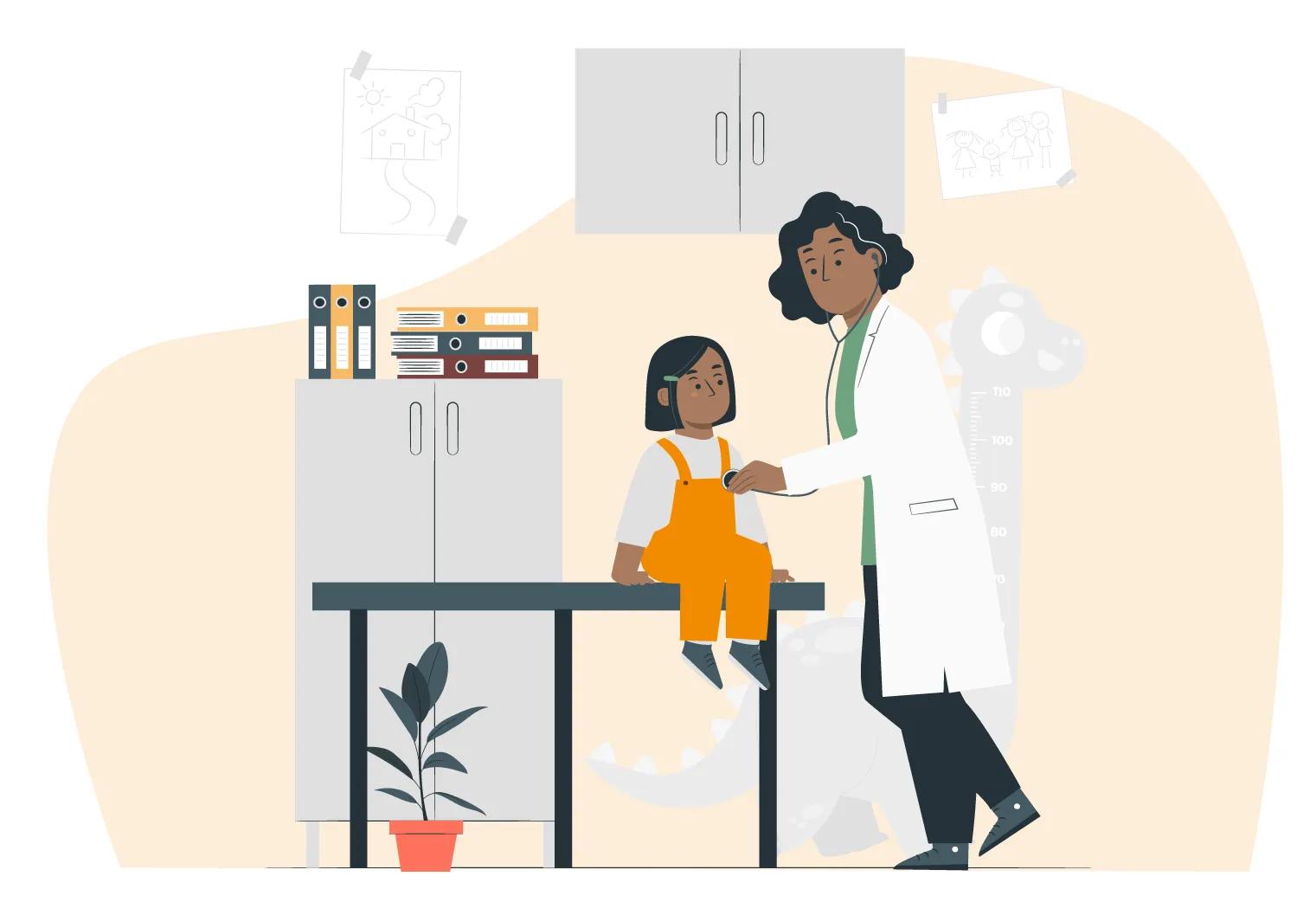
Acute and chronic malnutrition are health complications that put growth at risk and affect children's potential development. In fact, a person's future physical, psychological and cognitive-behavioral development as an adult depends on good nutrition in childhood.
Among the consequences of malnutrition are problems with educational performance, difficulties with attention and memory, and also alterations in reproductive health. Even more seriously, acute malnutrition can cause death.
Although both are similar malnutrition problems, they have some distinguishing characteristics, which we present in this Pata Pila article.
As a result, you will have all the information you need to know the difference between acute and chronic malnutrition, and you will also learn about ways to help.
1. Chronic malnutrition causes growth problems
This disorder is characterized by a failure with respect to the expected height and weight for the child's age, as a result of a nutrient deficit over a prolonged period of time.
It is a progressive process in which a series of basic foods needed for the child's proper development have been lacking.
Below, we detail some of the effects associated with this health problem, which can sometimes become irreversible:
- Stunted physical growth, evidenced by reduced height, weight and arm circumference.
- Lack of cognitive development, which will negatively affect future academic and educational performance.
- Problems interacting with others.
- Obvious physical and facial changes compared with other children of the same age.
- Low IQ in adulthood.
- Fewer years of schooling.
- Reduced income in adulthood.
2. Acute malnutrition involves a risk to life
Help us fight malnutrition!
In this type of child malnutrition in children, the infant's weight is so low that there is a risk of death. For this reason, urgent medical attention is required to try to reverse the condition.
Acute malnutrition can be subclassified according to the following parameter:
- Mild acute malnutrition: in this case, the child has a weight appropriate for their age. However, their height is lower than expected.
- Moderate acute malnutrition: weight and height do not match their age.
- Severe acute malnutrition: this includes cases of children who weigh less than 30% of what is expected for their height.
On the other hand, the lack of sufficient calories and quality food causes a drop in the child's weight, and these children usually present the following clinical signs and conditions:
- Protruding bones.
- Swelling in the stomach, face, feet and upper and lower limbs.
- Dry skin and hair.
- Brittle nails.
- A weakened immune system.
- Illnesses of varying severity that can cause the child's death, such as diabetes, blood pressure problems, digestive system disorders, cancer and various infections.
3. Acute and chronic malnutrition are related to structural poverty
Despite the distinctions that can be made between the two problems, one of the main causes of child malnutrition in Argentina is extreme poverty.
As Lara Salinas says in a Clarín article, child malnutrition is not inherent to the child, but the result of a set of variables that affect the context in which that child lives. This is a consequence of limited access to good health and sanitation conditions, situations of poverty and contexts of violence of all kinds.
For its part, the localities and provinces most affected by child malnutrition in Argentina are considered to be:
- Jujuy.
- Salta.
- Catamarca.
- Mendoza.
- La Plata.
- Brandsen.
- Chubut.
And according to the Permanent Household Survey on the incidence of poverty and destitution, presented in an INDEC report, 27.7% of households are below the poverty line. In addition, 6.8% are below the extreme poverty line.
In conclusion, distinguishing between acute and chronic malnutrition is essential to put into action the different mechanisms that exist to combat these health problems.
We take a comprehensive approach to the problem of child social welfare in order to fight acute and chronic malnutrition. All of it starts with training and working together with mothers, the main reference point for children in their first years of life.
If you would like to support an NGO like Pata Pila, you can make a monthly donation on an ongoing basis or as a one-time gift, and so become part of La Comunidad. Keep in mind that 100% of the money raised is invested in developing projects aimed at improving the quality of life of vulnerable communities in our country.
Help us fight acute and chronic malnutrition. In doing so, we will have the chance to change the present way of life and the future of thousands of adults in Argentina.